A Morning in Ybor City
I’ve been meaning to do a photo walk through Ybor City for the better part of five years. I’ve looked at group events, thought about going on my own, and somehow just never made it happen. Last night, as I sat down trying to decide where this morning’s photo walk would take me, I decided it was finally time for Ybor.
As I often do, I asked ChatGPT to help map out the visit—where to park, what iconic spots I should look for, and how I might make my way through the area. It created a PDF, and just like that, I had an itinerary.
The alarm went off at 5 AM, and it was time to go.
I had visions of composing photographs around Ybor’s neon lights while the streets were still dark and quiet. I’d driven through the area late at night before, when the glow of the signs and storefronts gave the streets an entirely different character. In my head, I suppose I was expecting that same lively 11 PM scene—just without all the people.
That’s not quite what Ybor looks like at 5 AM.
When I arrived, I was surprised to discover that most of the neon lights had already been turned off for the morning. The Ybor I had pictured on the drive over wasn’t the Ybor waiting for me.
But sometimes that’s exactly when a photo walk gets interesting.
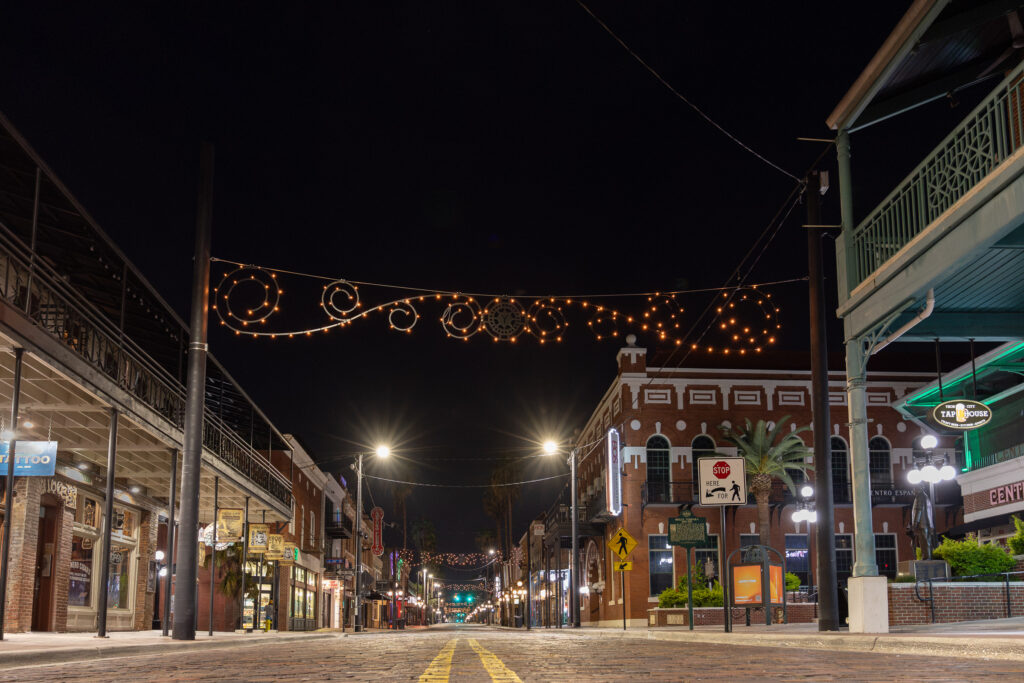
This was the first photo I took. I was amazed that I could get down this low and compose the scene without crowds, cars, or other distractions. I have a compact tripod called a Platypod that lets me position my camera about six inches off the ground, and it is quickly becoming one of my favorite tools.
From there, I started walking the strip. I’ve never spent much time in Ybor City, so most of what I was seeing was new to me. At that hour, the streets had a very different personality from the Ybor most people know.
As I walked, a bouncer stepped out of one of the nightclubs escorting four women. I assumed they were part of the wait staff, finally heading home after a long overnight shift. It was an interesting reminder that while my day had just begun, for some of the people around me, theirs was just coming to an end.
Before long, I stumbled across the Centro Español.
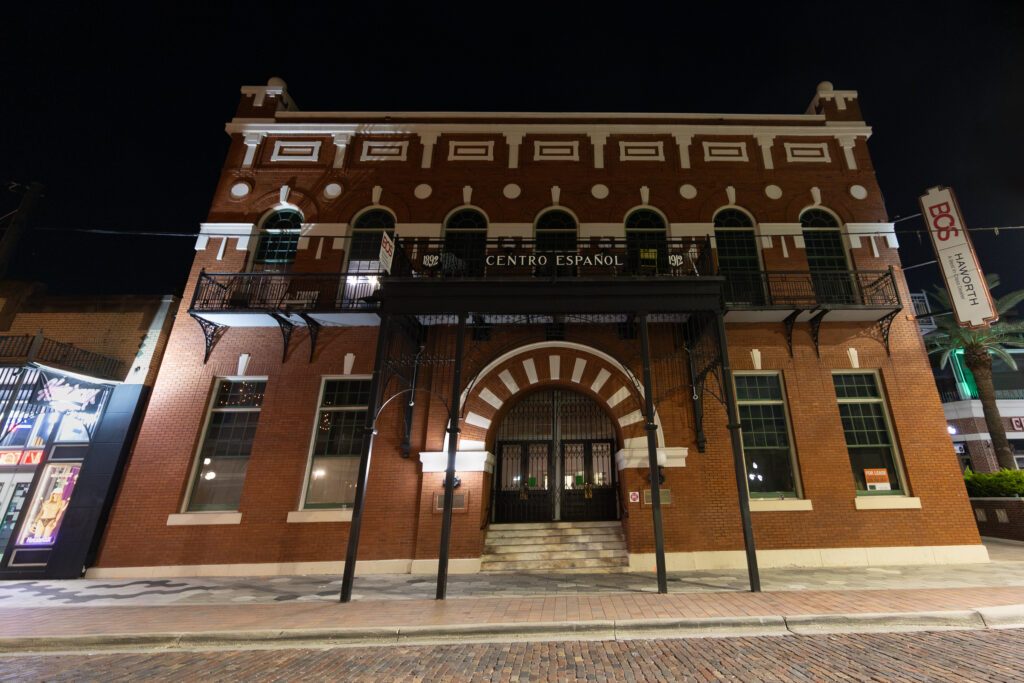
Founded by Spanish immigrants and cigar factory leaders, the Centro Español was created as a “society of instruction and recreation” for Ybor City’s growing Spanish community. Today, the historic building has taken on a different life, housing commercial spaces and restaurants while still preserving a piece of the neighborhood’s past.
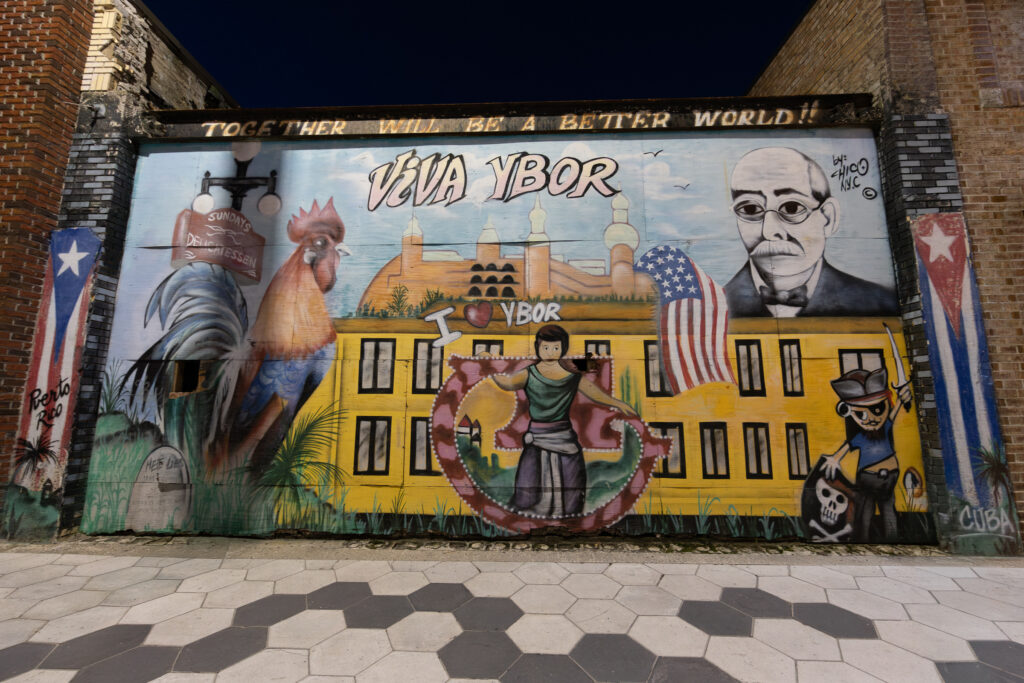
At this point, I turned around and started heading east toward the Columbia Restaurant. Along the way, I came across this full-wall mural. Across the top are the words, “Together will be a better world,” paying homage to the Spanish, Italian, Cuban, and Puerto Rican communities whose shared heritage helped shape Ybor City.
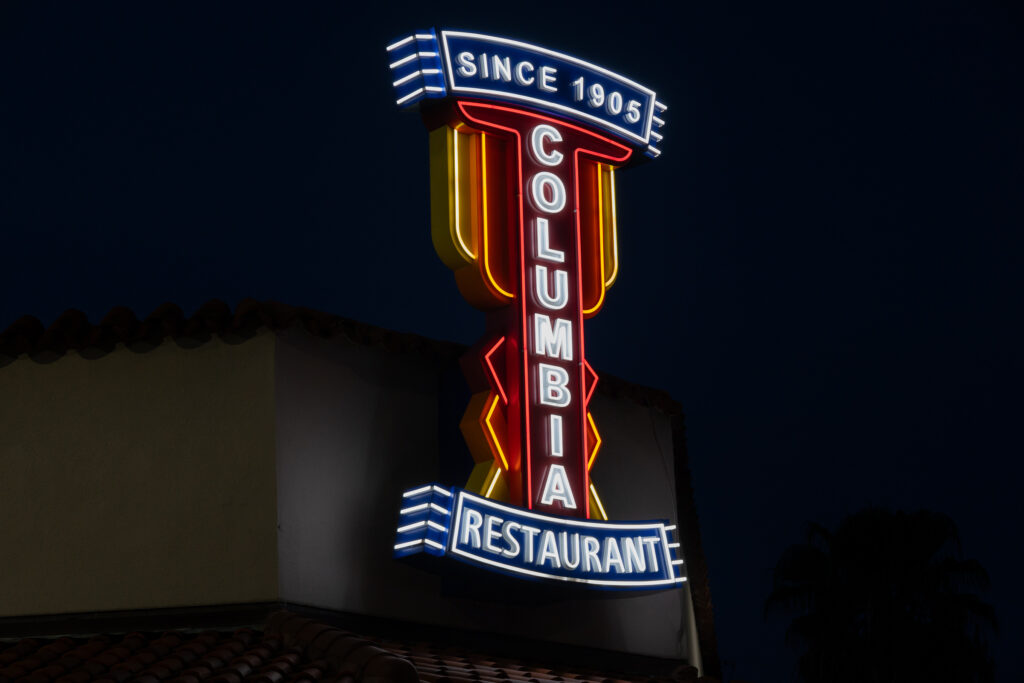
I soon found myself standing in front of the Columbia Restaurant, and this time I was in luck—the neon lights were still glowing. After arriving in Ybor that morning to find so many of the lights already turned off, seeing that familiar sign illuminated felt like a small victory.
And what a sign it is. The Columbia Restaurant is an Ybor City icon. Founded in 1905, it is Florida’s oldest continuously operated restaurant and also holds the distinction of being the world’s largest Spanish restaurant.
Standing there in the quiet of the early morning, with almost no one around and the neon still burning, I finally caught a little glimpse of the Ybor City I had imagined when my alarm went off at 5 AM.
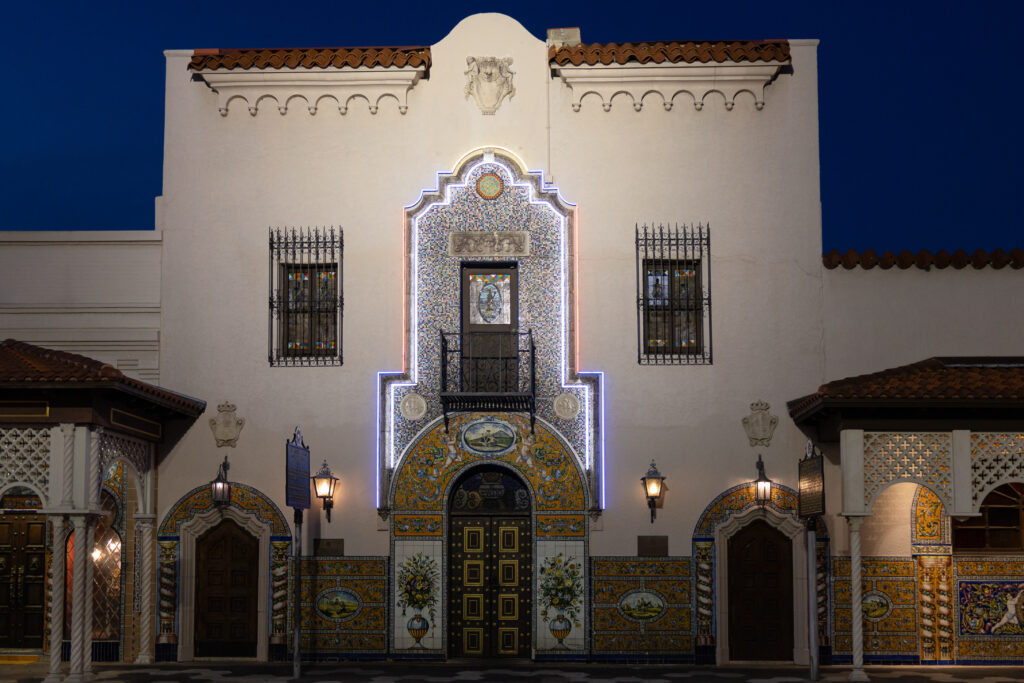
I walked around to the side of the building. The facade is every bit as impressive as the history behind it. Its Spanish Revival architecture is filled with details that reward a closer look—from the colorful ceramic tilework and wrought-iron window grilles to the arched doorways, barrel-tile roof, and old-world lanterns. Above the main entrance, a second-story balcony framed by vibrant tiles immediately draws the eye, while covered colonnades stretch along either side of the building. In the quiet of the early morning, with no crowds competing for attention, I had a chance to slow down and appreciate just how much character is built into the Columbia’s exterior.
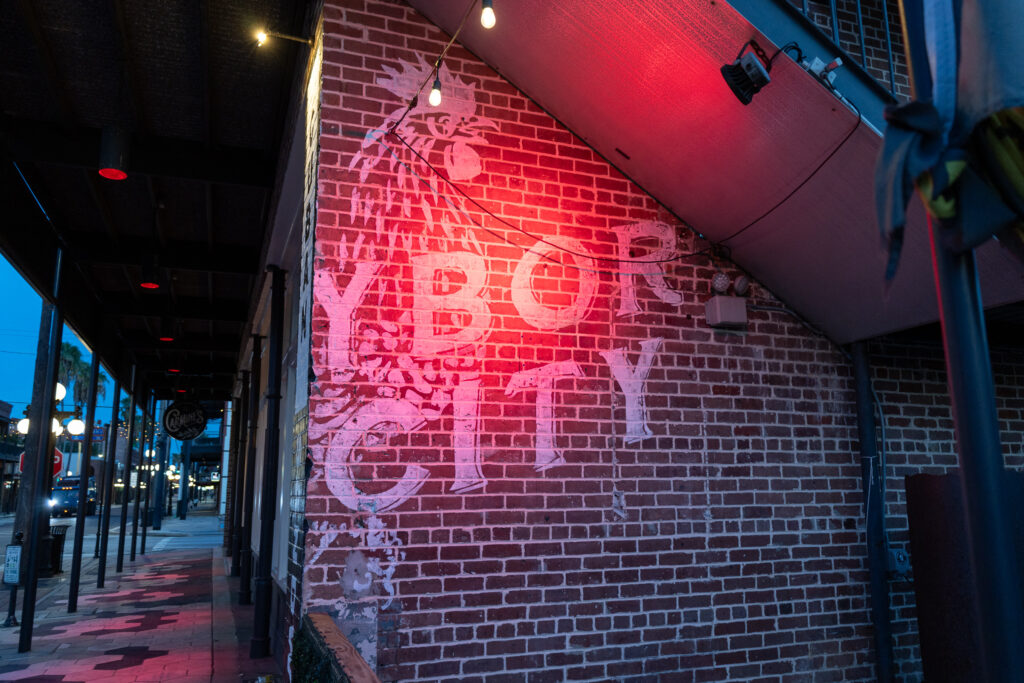
Moving west again, I came across a building glowing under red accent lights. Across one wall was a mural bearing the words “Ybor City,” along with the unmistakable outline of a rooster. Roosters and chickens are a part of Ybor’s character—they’re protected here and roam freely throughout the neighborhood. In fact, when I first arrived that morning, their calls were about the only sounds breaking the silence of the empty streets.
As I was setting up my Platypod for the shot, a man passing by in an electric wheelchair stopped and asked what I was doing.
“Making art,” I told him.
He looked up at the wall I had been studying and told me that even though he lived in the neighborhood, he had never noticed the mural before. I loved that. Here I was, visiting Ybor and seeing much of it for the first time, and somehow my camera had caused someone who lived there to stop and see something familiar in a new way.
After our brief conversation, I finished setting up my camera and landed on this composition.
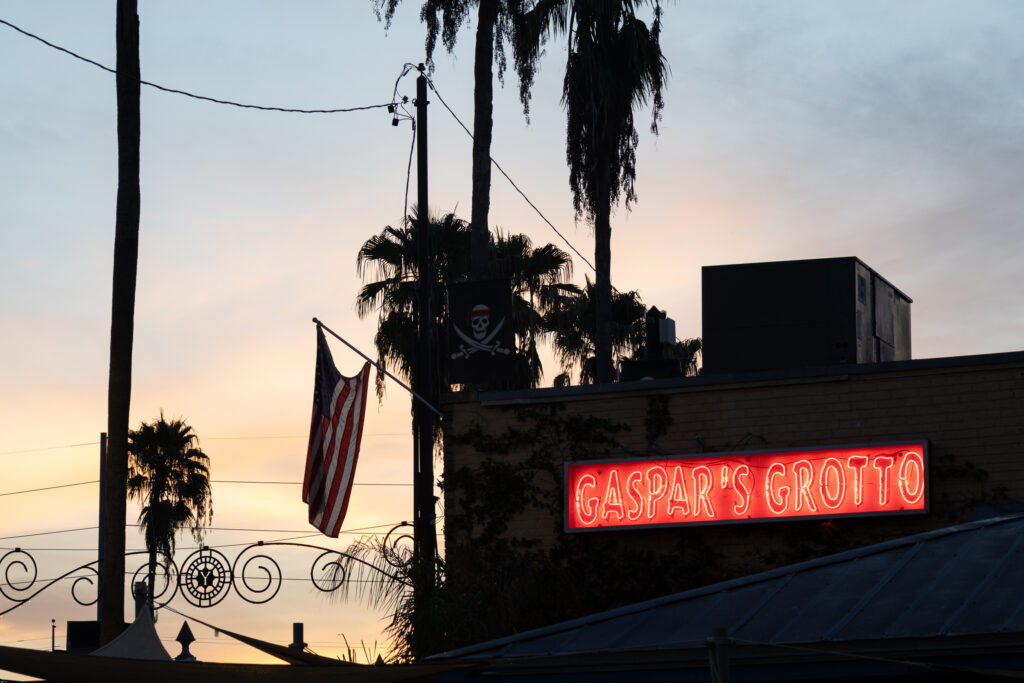
At this point, the sun finally decided to make an appearance. I remembered seeing the neon sign at Gaspar’s Grotto earlier and made my way back toward it, wondering if the rising sun might give me something interesting to work with.
Gaspar’s Grotto takes its name from José Gaspar, better known as Gasparilla, the legendary Spanish pirate said to have terrorized Florida’s Gulf Coast from the late 1700s into the early 1800s. Whether Gaspar actually existed is another story, but his legend has become deeply woven into Tampa Bay culture. Each year, the area embraces its favorite pirate with the Gasparilla Pirate Festival, parades, road races, and other events that take over Tampa at the beginning of the year.
When I arrived, I realized my hunch had paid off. The neon glow of Gaspar’s Grotto, the American and pirate flags catching the morning light, and the sun beginning to rise behind them created a composition that felt distinctly Ybor—a little colorful, a little rebellious, and unmistakably Tampa.
At this point, I decided to call it a day and walked back to my car. I packed up my camera and started driving toward downtown Tampa—something I seem to do almost automatically. There’s just something about the Riverwalk that keeps calling me back.
Then, as I made a right turn at a light, I saw it.
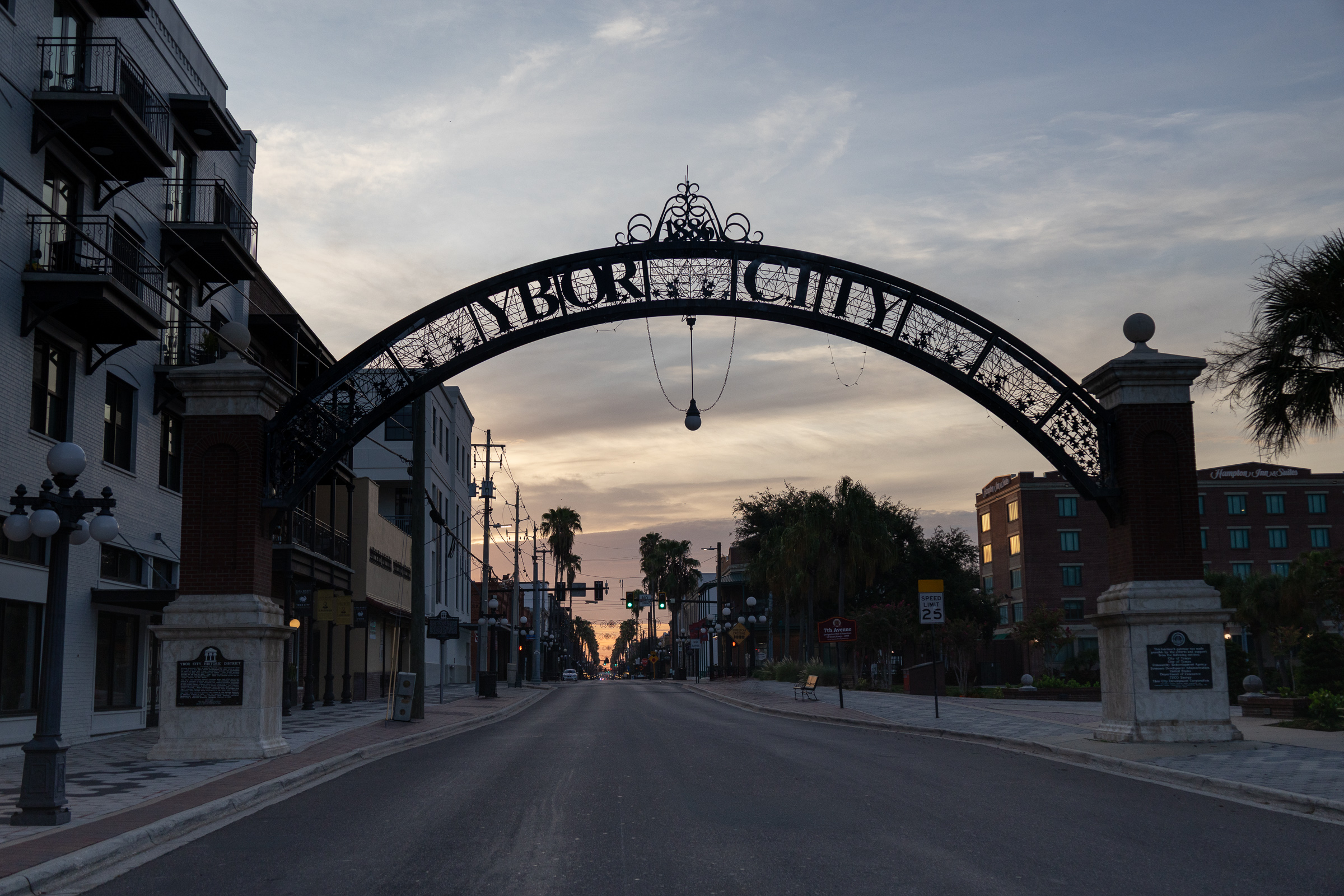
The Ybor City arch was ahead of me, with the rising sun almost perfectly centered beneath it.
There was no way I was driving past that.
I pulled over, grabbed my camera, and walked back to set up the composition that ultimately became the feature image for this post. I waited for a couple of cars to pass and, when the road was finally clear, stepped into the middle of the street to get the perspective I wanted.
Just as I was pressing the shutter, another car came along, its driver beeping the horn to make sure I knew I was standing in the way. Message received.
But I had the photograph.
It was a shot I hadn’t planned, at a location that wasn’t on my itinerary, taken after I had already packed away my camera and decided the morning was over. And somehow, it became the photograph that best captured the entire walk.
What a way to end five years of saying, “Someday, I need to photograph Ybor.”